
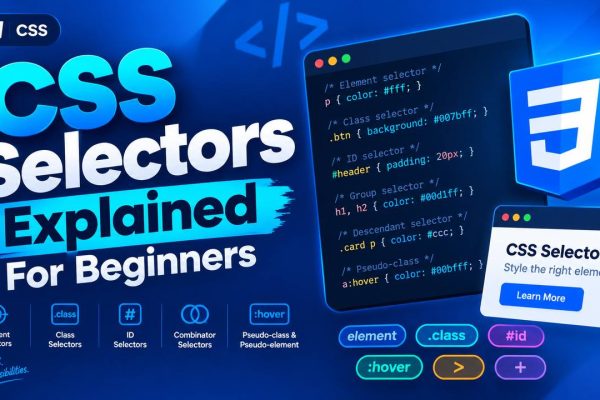
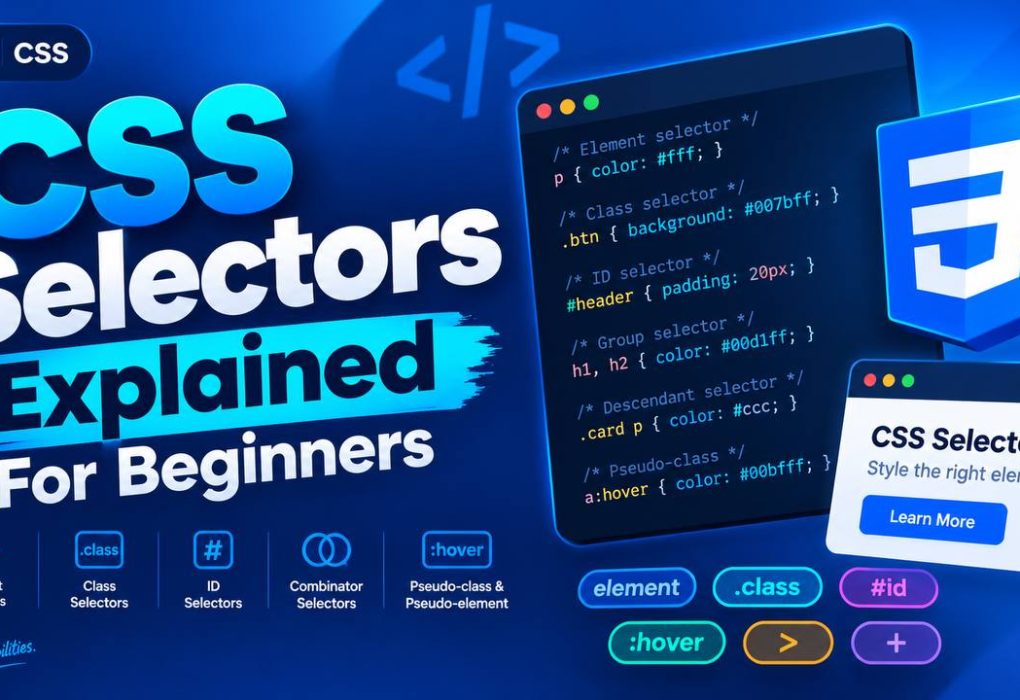
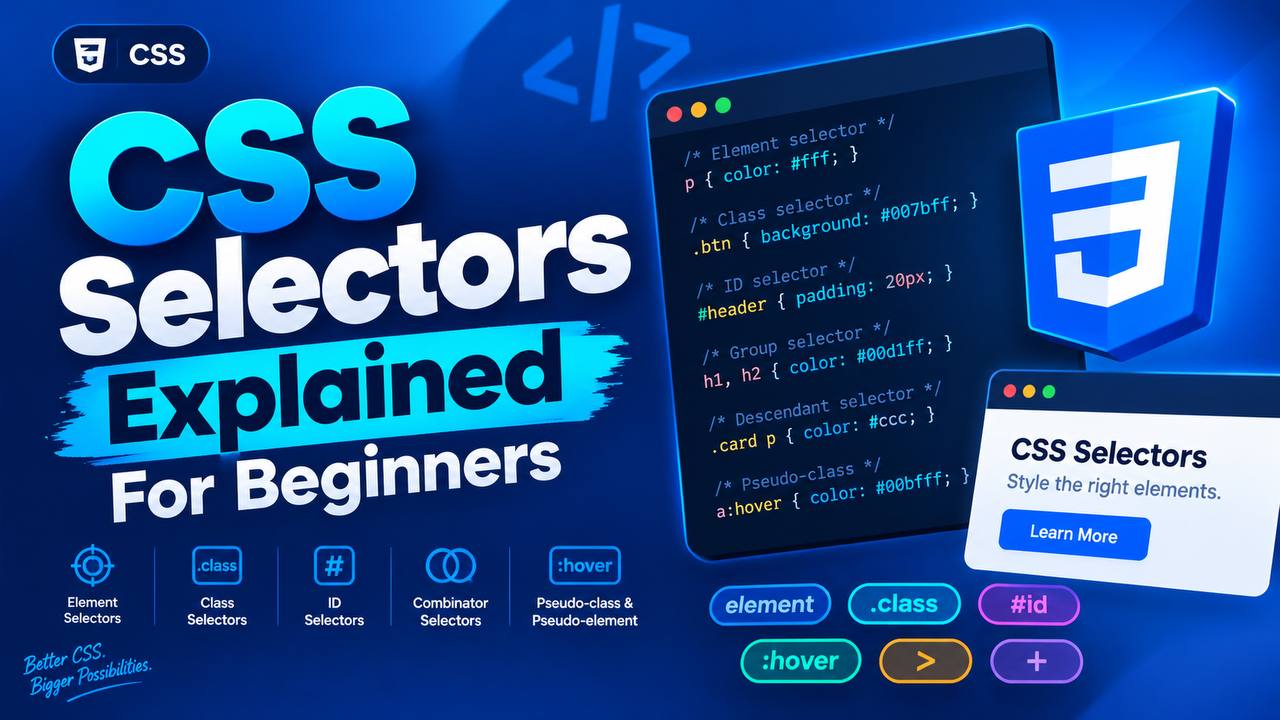
CSS Selectors Explained for Beginners
When you start learning CSS, one of the first things you need to understand is how CSS knows which HTML elements to style. You might write a CSS rule that changes a heading to blue, increases the size of a paragraph, or gives a button a background color. But how does CSS know which heading,…
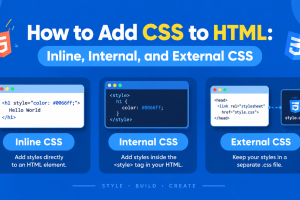
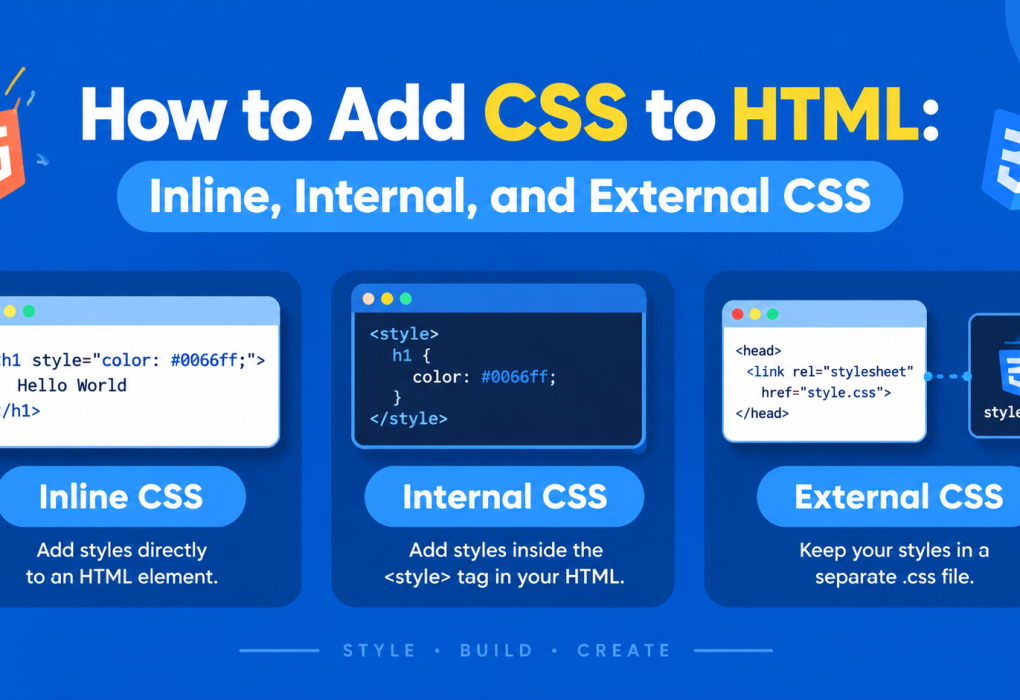
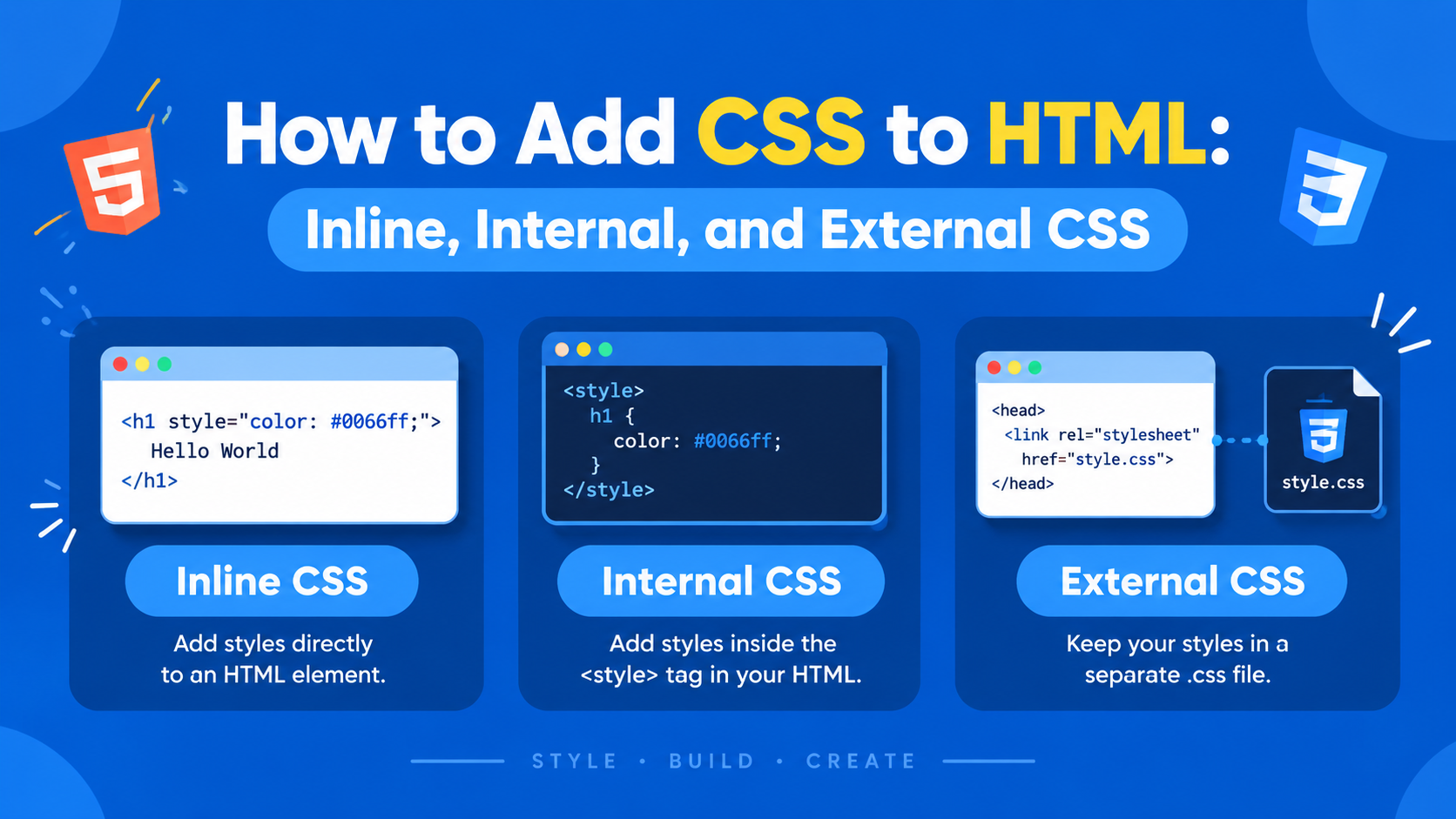
How to Add CSS to HTML: Inline, Internal, and External CSS
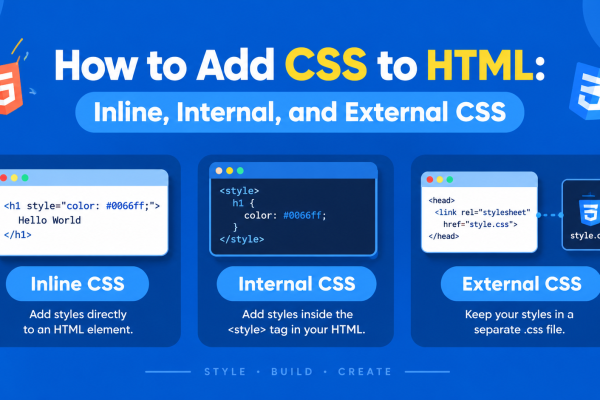
HTML gives a webpage its structure, but structure alone does not make a website look very attractive. If you create a page using only HTML, you may have headings, paragraphs, buttons, images, and links, but the page can look very plain. This is where CSS comes in. CSS stands for Cascading Style Sheets. It is…
HTML vs CSS: What’s the Difference?
If you are just starting to learn web development, two of the first technologies you will probably encounter are HTML and CSS. You may see developers working with both at the same time and wonder: What exactly does HTML do, and what does CSS do? Why do I need both? The easiest way to understand…
What Is CSS? A Complete Beginner’s Guide
If you are learning web development, you will quickly come across three important technologies: HTML, CSS, and JavaScript. Each one has a different job, but CSS is the technology responsible for making a webpage look attractive, organized, and comfortable to use. HTML provides the structure of a webpage. CSS controls how that structure looks. For…
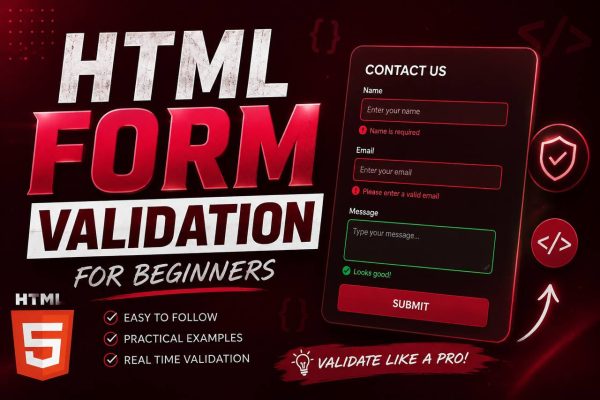
HTML Form Validation for Beginners
Forms are an important part of almost every website. Whenever you create an account, sign up for a newsletter, contact a business, make a purchase, or log in to a website, you are usually interacting with an HTML form. But simply creating a form is not enough. You also need to make sure that users…
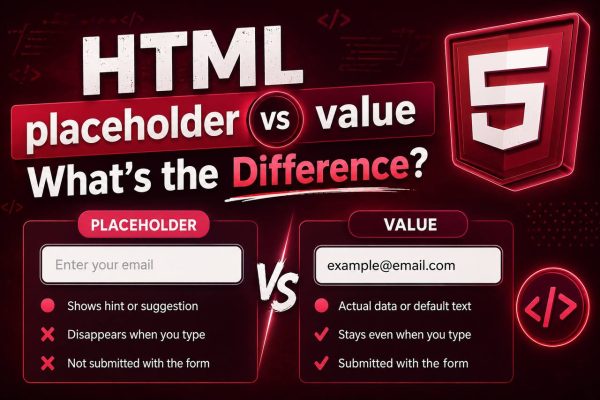
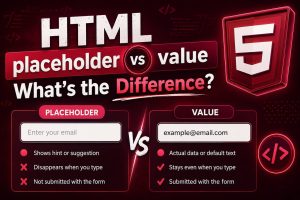
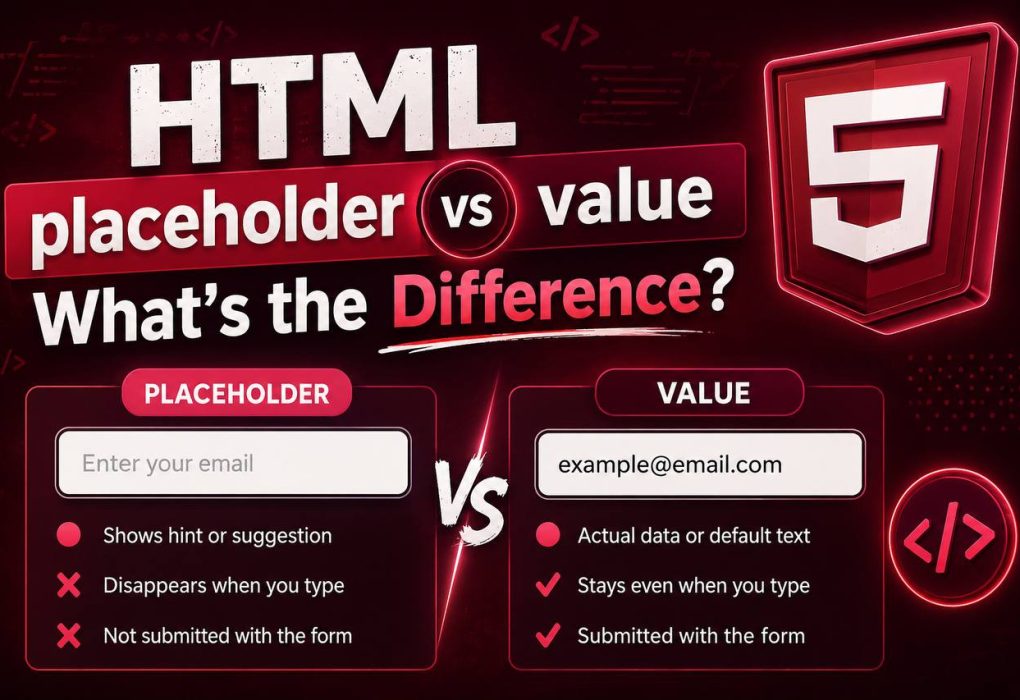
HTML placeholder vs value: What’s the Difference?
When building forms with HTML, you will often work with input fields where users are expected to enter information such as their name, email address, phone number, password, or search query. While working with form inputs, two attributes that can easily confuse beginners are placeholder and value. At first glance, they may seem to do…
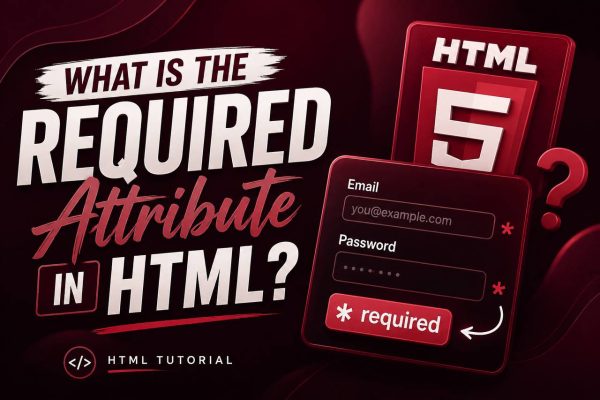
What Is the required Attribute in HTML?
When you create a form with HTML, you usually want users to provide certain information before submitting it. For example, if you create a registration form, you may need the user’s name, email address, and password. Leaving these fields empty could cause problems because your website would receive incomplete information. HTML provides a simple solution…
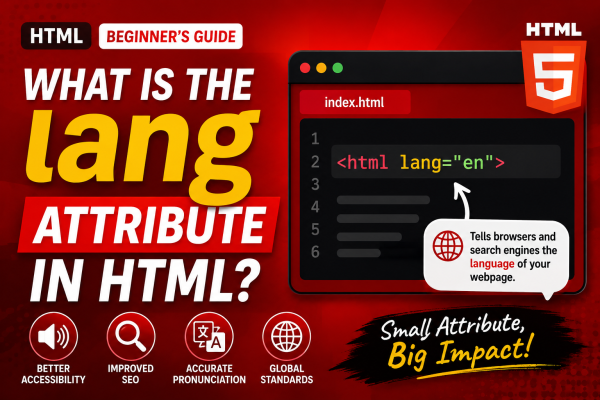
What Is the lang Attribute in HTML? A Beginner’s Guide
When you create a webpage with HTML, there are many small details that may seem unimportant at first but can make a big difference in how your website works. One of those details is the HTML lang attribute. The lang attribute tells browsers, search engines, screen readers, and other technologies what language the content of…
Top 10 HTML Coding Mistakes Beginners Make (And How to Fix)
Learning HTML is one of the best ways to start a journey into web development. HTML provides the basic structure of almost every webpage, making it an essential skill for beginners who want to learn CSS, JavaScript, and modern web development. However, learning HTML is not only about memorizing tags. Beginners also need to understand…
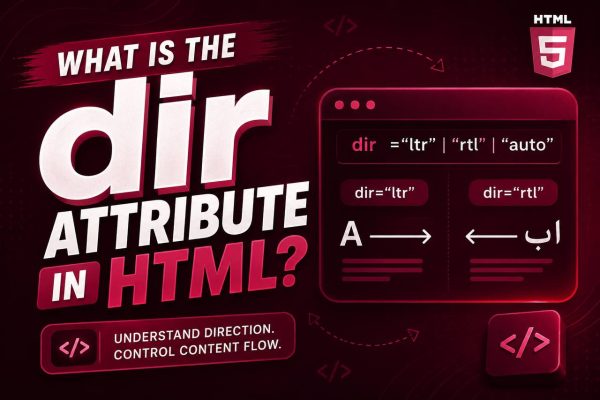
What is the dir Attribute in HTML?
When building websites, developers usually focus on creating content that looks attractive and is easy to read. However, there is another important aspect of web design that beginners often overlook text direction. Not every language is read from left to right. Some languages are written from right to left, and HTML provides a built-in way…