
When learning HTML, most beginners focus on common elements like headings, paragraphs, images, links, forms, and tables. However, HTML also contains some specialized tags that are designed for specific languages and text formatting needs. One of these lesser-known elements is the <rp> tag.
At first glance, the <rp> tag may seem confusing because it is not used in everyday web development projects. In fact, many beginner websites may never need it. However, understanding what it does is still useful because it helps you learn more about semantic HTML and international web standards.
The <rp> element works alongside other tags such as <ruby> and <rt> to provide pronunciation information for certain languages, particularly East Asian languages like Japanese, Chinese, and Korean.
In this beginner-friendly guide, you’ll learn what the HTML <rp> tag is, why it exists, how it works, where it is used, and when you might need it.
This article keeps the explanations simple and focuses mainly on understanding the concept rather than writing lots of code.
What is the HTML <rp> Tag?
The HTML <rp> tag stands for Ruby Parentheses.
It is used as a fallback element inside a <ruby> element.
In simple words, the <rp> tag provides parentheses around pronunciation text when a browser does not fully support ruby annotations.
The <rp> element is not meant to be displayed in modern browsers that support ruby text properly.
Instead, it acts as a backup solution.
Understanding Ruby Annotations First
Before learning <rp>, you need to understand ruby annotations.
Ruby annotations are small pronunciation guides that appear above or beside characters.
They are commonly used in:
- Japanese text
- Chinese text
- Educational materials
- Language learning websites
For example, a difficult character may have a pronunciation guide displayed above it.
This helps readers understand how the character should be pronounced.
The Tags That Work Together
The <rp> tag is usually used alongside:
| Tag | Purpose |
|---|---|
<ruby> | Creates ruby annotation container |
<rt> | Displays pronunciation text |
<rp> | Provides fallback parentheses |
These three elements often work together.
Basic Syntax of the <rp> Tag
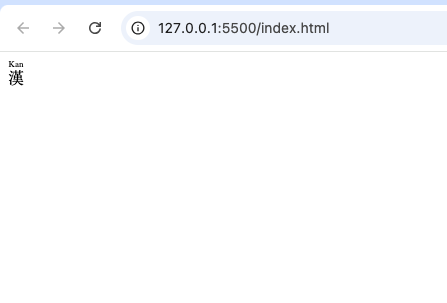
Here is a simple example:
<ruby>
  漢
  <rp>(</rp>
  <rt>Kan</rt>
  <rp>)</rp>
</ruby>
In this example:
<ruby>creates the annotation structure.<rt>contains pronunciation text.<rp>provides fallback parentheses.
In this example:
<ruby>creates the annotation structure.<rt>contains pronunciation text.<rp>provides fallback parentheses.
Why Does the <rp> Tag Exist?
You might wonder:
“If modern browsers already support ruby annotations, why do we need <rp>?”
The answer is browser compatibility.
Years ago, some browsers could not display ruby annotations correctly.
The <rp> tag helped ensure users could still understand the pronunciation information.
Instead of showing formatted ruby text, unsupported browsers would display parentheses around the pronunciation.
This created a readable fallback.
How the <rp> Tag Works
Think of the <rp> element as a backup plan.
When ruby annotations work correctly:
- The pronunciation appears in its intended position.
- The
<rp>content usually remains hidden.
When ruby annotations are not supported:
- The parentheses from
<rp>appear. - The pronunciation remains readable.
This helps preserve meaning.
Real-Life Example
Imagine a language-learning website teaching Japanese characters.
A lesson may display:
Character: 漢
Pronunciation: Kan
Modern browsers display the pronunciation neatly above the character.
Older browsers might instead display:
漢(Kan)
The parentheses come from the <rp> element.
Why Beginners Rarely Use <rp>
Most beginner websites focus on:
- Blogs
- Portfolios
- Landing pages
- Business websites
These projects usually do not require ruby annotations.
Because of this, many developers never encounter the <rp> tag until later.
However, it remains an important part of HTML standards.
What Does “Fallback” Mean?
The term fallback appears often when discussing <rp>.
A fallback is an alternative solution used when the preferred method does not work.
Think of it like this:
Preferred display:
Pronunciation appears above text.
Fallback display:
Pronunciation appears inside parentheses.
The <rp> element helps provide that fallback experience.
Languages That Commonly Use Ruby Text
Ruby annotations are especially useful for languages with complex writing systems.
Examples include:
- Japanese
- Chinese
- Korean educational materials
Language-learning websites often rely on ruby text.
Difference Between <rp> and <rt>
Beginners often confuse these two tags.
Here is the difference:
<rp> | <rt> |
|---|---|
| Creates fallback parentheses | Contains pronunciation text |
| Backup display | Main annotation content |
| Usually hidden in supported browsers | Visible annotation text |
The <rt> element carries the actual pronunciation.
The <rp> element supports compatibility.
Difference Between <rp> and <ruby>
These elements have different responsibilities.
<rp> | <ruby> |
|---|---|
| Provides fallback text | Creates annotation container |
| Used inside ruby structure | Parent element |
| Small supporting role | Main structure |
The <ruby> element is the main container.
The <rp> element helps support it.
Why Ruby Annotations Matter
Ruby annotations make reading easier.
They help users:
- Learn pronunciation
- Understand difficult characters
- Read educational materials
- Study foreign languages
Without ruby text, language-learning resources can become harder to understand.
HTML5 and the <rp> Tag
The <rp> element became part of modern HTML standards alongside ruby support.
HTML5 expanded support for semantic and language-related elements.
This allowed developers to create more accessible international content.
Browser Support for <rp>
Modern browsers generally support ruby annotations well.
These include:
- Chrome
- Firefox
- Safari
- Edge
- Opera
Because browser support has improved significantly, the <rp> element is less noticeable today.
However, it still exists for compatibility purposes.
Accessibility Benefits
The <rp> tag contributes to accessibility by helping ensure pronunciation information remains readable.
Language-learning content becomes easier to understand when pronunciation guidance is preserved.
Accessibility often involves creating alternative ways to communicate information.
The <rp> element supports that goal.
Educational Websites and <rp>
One of the most common places where <rp> appears is educational content.
Examples include:
- Japanese learning platforms
- Chinese language courses
- Online dictionaries
- Reading practice websites
These resources often use ruby annotations extensively.
Real-World Example: Language Learning
Imagine a website teaching Japanese vocabulary.
Each lesson may display:
- Characters
- Pronunciation guides
- Reading hints
Ruby annotations make the lessons easier to follow.
The <rp> element helps ensure compatibility.
Can You Use <rp> Without <ruby>?
No.
The <rp> element is specifically designed to work inside a ruby annotation structure.
Using it alone does not make sense.
It should always appear as part of a ruby system.
Common Beginner Mistakes
Here are mistakes beginners sometimes make.
1. Thinking <rp> Creates Pronunciation Text
The pronunciation itself belongs inside <rt>.
The <rp> element only adds fallback symbols such as parentheses.
2. Using <rp> Outside Ruby Annotations
The <rp> tag should only be used within ruby-related markup.
3. Confusing It with Regular Parentheses
Normal parentheses can be typed directly.
The <rp> tag specifically serves ruby compatibility purposes.
4. Assuming It Is Required for Every Website
Most websites never need ruby annotations.
The <rp> tag is useful only in specific situations.
When Should You Use <rp>?
You should consider using <rp> when:
- Building language-learning websites
- Displaying Japanese pronunciation guides
- Creating educational content
- Working with ruby annotations
Otherwise, you may never need it.
SEO and the <rp> Tag
The <rp> element does not directly affect search engine rankings.
However, it helps ensure content remains understandable across different browsers.
Better readability contributes to a better user experience.
Semantic HTML and <rp>
The <rp> element is part of semantic HTML because it serves a specific purpose.
Rather than using generic text, it tells browsers:
“This content provides fallback support for ruby annotations.”
Semantic HTML improves:
- Readability
- Accessibility
- Maintainability
- Standards compliance
Why It Is Still Part of HTML
Some beginners wonder why a rarely used element still exists.
The reason is that HTML aims to support many languages and cultures around the world.
Not every element is intended for every website.
Some tags exist to solve specialized problems.
The <rp> element is one of those specialized tools.
Use It with <ruby>
The <rp> element belongs inside ruby structures.
Keep Fallback Text Simple
Parentheses are the most common fallback symbols.
Focus on Readability
The goal is to help users understand pronunciation information.
Test Across Browsers
Always check how ruby annotations appear in different browsers.
Follow HTML Standards
Use <rp> only when it serves its intended purpose.
Understanding Specialized HTML Elements
The <rp> element is a good reminder that HTML contains many specialized tags.
Some are used daily:
<div><p><a><img>
Others serve specific needs:
<ruby><rt><rp>
Learning these tags expands your understanding of HTML as a whole.
Why Learning Less Common Tags Is Helpful
Even if you never use the <rp> element directly, learning about it helps you:
- Understand browser compatibility
- Learn semantic HTML
- Explore international web standards
- Improve your overall HTML knowledge
Every tag teaches something about how the web works.
The HTML <rp> tag is a small but important element designed to support ruby annotations. Its primary role is to provide fallback parentheses around pronunciation text when ruby formatting is not fully supported by a browser.
While most beginner websites will never need the <rp> tag, understanding how it works gives you a deeper appreciation for HTML’s ability to support different languages and writing systems.
As you continue learning HTML, you’ll discover that some elements are used every day, while others are designed for specific situations. The <rp> tag falls into the second category, but it remains a valuable part of the HTML standard.
The more you explore HTML, the better prepared you’ll be to build websites that are accessible, readable, and useful for people all around the world.
ketoconazole indication reference
ketoconazole indication reference
terbinafine nail fungus explained
terbinafine nail fungus explained
toradol iv onset
toradol iv onset
minoxidil pk technical overview
minoxidil pk technical overview
ED drug food‑related onset changes
ED drug food‑related onset changes
insurance coverage verification
insurance coverage verification
online safety consumer protection
online safety consumer protection
bronchitis clinical context
bronchitis clinical context
penicillin allergy immune response
penicillin allergy immune response
pneumonia shortness of breath
pneumonia shortness of breath
the mechanism behind sildenafil
the mechanism behind sildenafil
TadalafilCentral Indian tadalafil overview
TadalafilCentral Indian tadalafil overview