
Artificial Intelligence, often called AI, is no longer a futuristic idea reserved for science fiction movies or advanced research labs. It is already part of everyday life, quietly working behind the scenes in many of the tools and services people use daily. From search engines and smartphones to social media feeds and online shopping recommendations, artificial intelligence is shaping how information is delivered, decisions are made, and problems are solved. For beginners, AI can seem confusing or intimidating, but at its core, it is much simpler and more practical than it first appears.
Artificial intelligence refers to the ability of machines or computer systems to perform tasks that would normally require human intelligence. These tasks include learning from experience, recognizing patterns, understanding language, making decisions, and solving problems. Instead of being programmed with fixed instructions for every situation, AI systems are designed to analyze data, learn from it, and improve their performance over time.

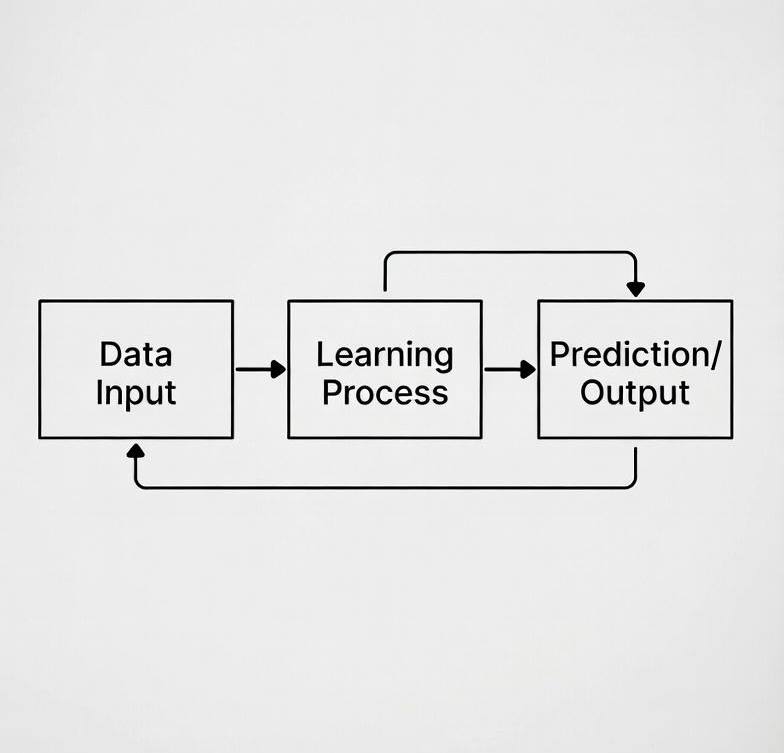
To understand AI properly, it helps to know how it differs from traditional computer programs. Traditional software follows strict rules written by a programmer. If a condition is met, the program performs a specific action. Artificial intelligence, on the other hand, focuses on learning from data. Instead of being told exactly what to do in every scenario, an AI system is trained using examples. Over time, it identifies patterns and makes predictions or decisions based on what it has learned.
One of the most important concepts in artificial intelligence is machine learning. Machine learning is a method that allows computers to learn from data without being explicitly programmed for each outcome. For example, instead of telling a computer exactly how to recognize spam emails, developers feed it thousands of examples of both spam and non-spam messages. The system studies these examples, learns the differences, and eventually becomes capable of identifying spam on its own. This learning process improves as more data is provided.
Another closely related concept is deep learning. Deep learning is a more advanced form of machine learning that uses structures called neural networks. These networks are inspired by the human brain and consist of layers that process information step by step. Deep learning is particularly effective for tasks such as image recognition, voice recognition, and natural language understanding. When you speak to a virtual assistant or unlock your phone using facial recognition, deep learning is often responsible for making those features work accurately.
Artificial intelligence is already present in many everyday applications, even if people do not always notice it. Search engines use AI to understand search queries and deliver relevant results. Streaming platforms rely on AI to recommend movies and music based on viewing or listening history. Navigation apps use AI to predict traffic patterns and suggest faster routes. Even email services use AI to filter spam and organize messages automatically.

AI is also playing an important role in business and industry. Companies use artificial intelligence to analyze customer behavior, forecast demand, detect fraud, and automate routine tasks. In healthcare, AI systems assist doctors by analyzing medical images, predicting potential health risks, and supporting diagnosis. In finance, AI helps monitor transactions and identify suspicious activities. These applications are not meant to replace human professionals but to support better and faster decision-making.
For beginners, one common concern is whether artificial intelligence will replace jobs entirely. While AI can automate certain repetitive or data-heavy tasks, it also creates new opportunities. Many roles now focus on working alongside AI systems, managing them, improving them, or using their insights to make better decisions. Skills such as critical thinking, creativity, problem-solving, and ethical judgment remain uniquely human and continue to be valuable in an AI-driven world.
Understanding how AI learns also helps beginners use it responsibly. Artificial intelligence systems depend heavily on the data they are trained on. If the data is biased or incomplete, the AI’s results may also be biased or inaccurate. This is why transparency, fairness, and ethical considerations are important topics in AI development. Responsible use of artificial intelligence involves ensuring data quality, protecting privacy, and applying AI in ways that benefit society rather than harm it.

Learning artificial intelligence does not require advanced mathematics or programming knowledge at the beginning. Beginners can start by understanding basic concepts, real-world examples, and how AI systems interact with users. Many tools today allow people to experiment with AI without writing code, such as chatbots, image generators, and automation platforms. These tools provide hands-on experience and make learning more approachable.
For those who want to go deeper, learning basic programming skills can be helpful. Languages like Python are commonly used in AI development because they are beginner-friendly and supported by many learning resources. However, the most important starting point is curiosity and consistency. Understanding what AI can and cannot do is more valuable than memorizing technical terms.
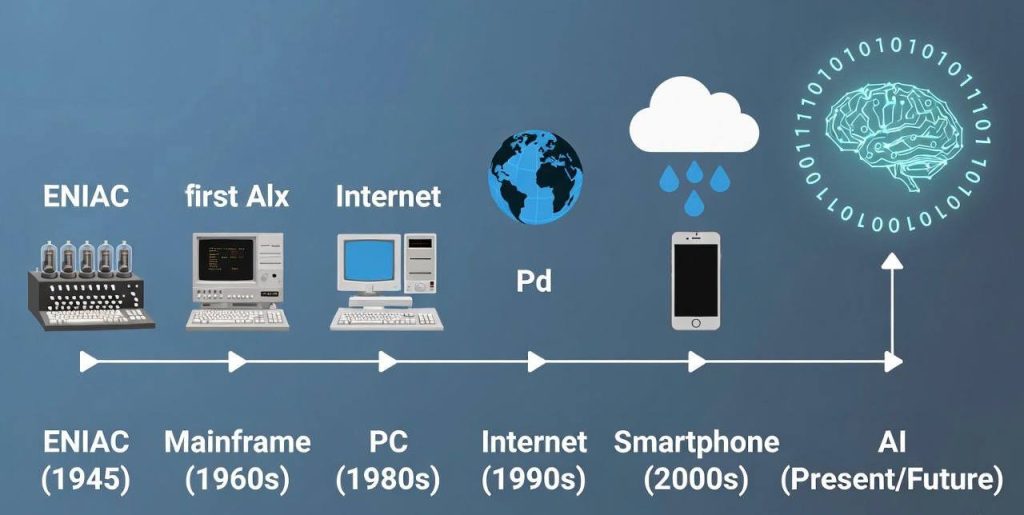
Artificial intelligence is not a single technology but a broad field that continues to evolve. As computing power increases and more data becomes available, AI systems become more accurate and capable. However, AI still relies on human guidance, goals, and values. Machines do not think or feel the way humans do; they process information based on patterns and probabilities. Keeping this distinction clear helps beginners develop realistic expectations about AI’s role.
In daily life, beginners can benefit from AI by using it as a tool rather than seeing it as something complex or threatening. AI can help organize tasks, analyze information, generate ideas, and save time. Whether it is improving productivity, learning new skills, or understanding data, artificial intelligence works best when used thoughtfully and responsibly.
As artificial intelligence becomes more integrated into society, having a basic understanding of how it works is increasingly important. This knowledge empowers people to make informed decisions, ask better questions, and adapt to technological changes. AI literacy is becoming as essential as basic computer literacy once was, and starting early provides a strong foundation for future learning.
In conclusion, artificial intelligence for beginners is not about mastering complex algorithms or becoming an expert overnight. It is about understanding the fundamental idea that machines can learn from data, recognize patterns, and assist humans in solving problems. By focusing on real-world applications, ethical awareness, and continuous learning, beginners can confidently navigate the world of artificial intelligence and use it as a powerful tool for growth and innovation.