When people think about building a website, they often focus on making it look attractive, load quickly, and work well on different devices. While these are important goals, there is another equally important aspect that every web developer should understand accessibility.
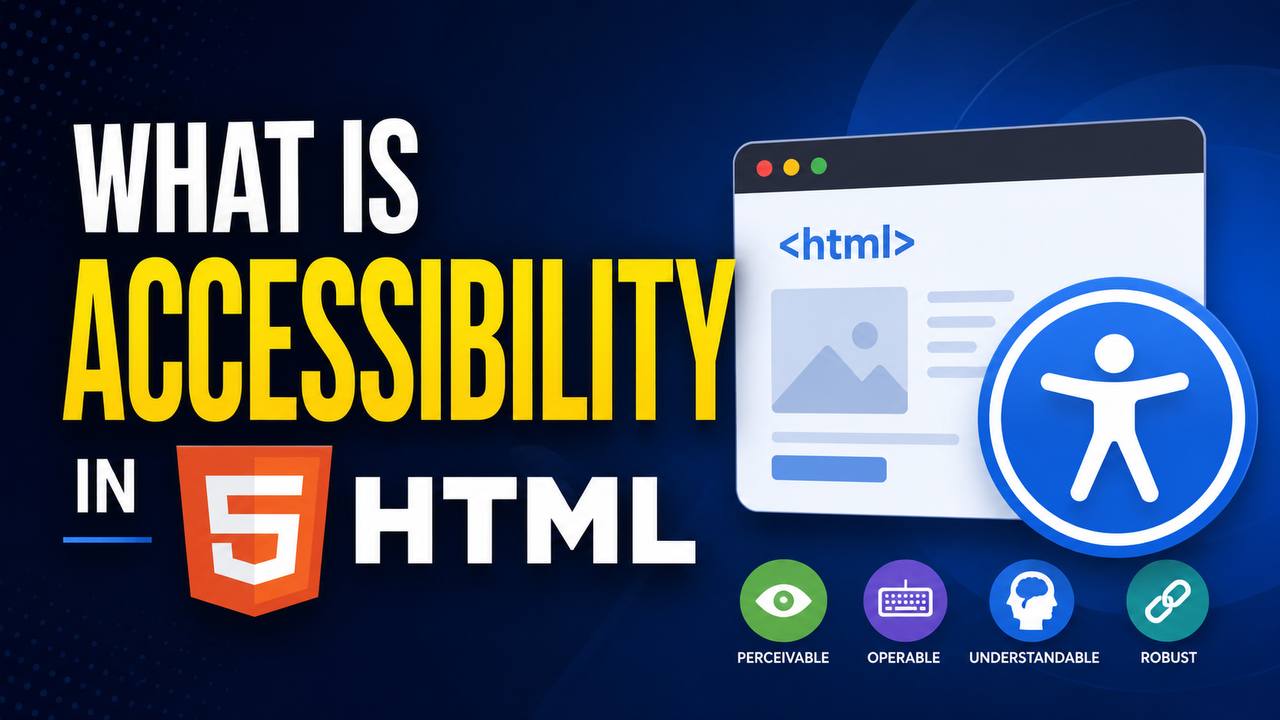
Accessibility in HTML means designing and coding webpages so that everyone can use them, including people with disabilities. A truly accessible website allows users to read content, navigate pages, complete forms, and interact with features regardless of their physical or cognitive abilities.
Accessibility is not only about following web standards. It is about creating websites that are inclusive, easy to use, and welcoming to all visitors. Whether you’re building a personal blog, an online store, a portfolio, or a business website, accessibility should always be part of your development process.
In this beginner-friendly guide, you’ll learn what accessibility in HTML means, why it matters, how HTML supports accessibility, common mistakes to avoid, and best practices that will help you build websites everyone can use.
This article focuses mainly on clear explanations rather than large amounts of code, making it easy to understand even if you’re just starting your HTML journey.
What Is Accessibility in HTML?
Accessibility in HTML refers to using HTML elements correctly so that websites can be understood and used by as many people as possible.
In simple terms, accessibility means removing barriers that might prevent someone from using your website.
For example, imagine someone who:
- Cannot see the screen clearly
- Cannot use a mouse
- Has difficulty hearing audio
- Uses assistive technology like a screen reader
An accessible website helps these users access the same information as everyone else.
Why Accessibility Matters
The internet is designed to connect people, and everyone deserves equal access to online information.
Accessibility benefits:
- People with visual impairments
- People with hearing impairments
- People with limited mobility
- Older adults
- Users with temporary injuries
- People using slower internet connections
- Mobile device users
By making your website accessible, you improve the experience for many different types of visitors.
Accessibility Begins with Good HTML
Many beginners think accessibility only involves advanced programming or special tools.
In reality, accessibility begins with writing clean, semantic HTML.
Using the correct HTML elements gives browsers and assistive technologies important information about your content.
For example:
- A heading tells users where a new topic begins.
- A button tells users an action can be performed.
- A navigation section identifies menus.
- A form label explains what information should be entered.
Good HTML creates a strong foundation for accessibility.
Who Benefits from Accessible Websites?
Accessibility helps far more people than many beginners realize.
For example:
People with Visual Impairments
Some users cannot see a webpage clearly.
They may use:
- Screen readers
- Screen magnifiers
- High-contrast displays
Accessible HTML helps these tools understand your content correctly.
People with Hearing Impairments
Some users cannot hear audio or videos.
Providing captions, transcripts, and descriptive text makes content accessible.
People with Limited Mobility
Not everyone can use a mouse.
Some users rely entirely on:
- Keyboard navigation
- Voice commands
- Alternative input devices
Accessible websites make keyboard navigation simple.
People with Cognitive Disabilities
Clear layouts, simple navigation, and meaningful headings make websites easier to understand.
Accessibility improves readability for everyone.
What Is Semantic HTML?
Semantic HTML means using HTML elements according to their intended purpose.
Instead of using generic containers everywhere, semantic elements describe what the content represents.
Examples include:
<header><nav><main><section><article><aside><footer>
These elements provide meaning that helps browsers, search engines, and assistive technologies understand the page structure.
Why Semantic HTML Improves Accessibility
Imagine reading a book with no chapter titles.
Everything would appear as one large block of text.
Semantic HTML creates structure.
For example:
- Headers identify major topics.
- Navigation elements identify menus.
- Main content identifies the primary information.
- Footer elements identify closing information.
This organization helps users quickly understand the page.
Using Proper Headings
Headings are one of the most important accessibility features.
Good heading structure helps users:
- Understand page organization
- Jump between sections
- Navigate using screen readers
A well-organized page feels much easier to explore.
Images Should Include Alternative Text
Images are common on websites, but not everyone can see them.
Alternative text (often called alt text) describes an image for users who rely on screen readers.
For example, instead of leaving an image without a description, you can explain what it shows.
Helpful alt text should describe the purpose of the image rather than simply stating that it is a picture.
Links Should Be Meaningful
A common beginner mistake is creating links with vague text such as:
- Click here
- Read more
- Learn more
These phrases provide little context.
Instead, links should explain where they lead.
For example:
- Download the HTML Guide
- Read the Accessibility Checklist
- View CSS Examples
Descriptive links improve navigation for everyone.
Forms Need Clear Labels
Forms allow users to:
- Register accounts
- Log in
- Submit feedback
- Contact businesses
Every input field should have a clear label explaining what information belongs there.
Examples include:
- Full Name
- Email Address
- Phone Number
Clear labels reduce confusion and improve accessibility.
Keyboard Accessibility
Not everyone uses a mouse.
Many users navigate websites using only a keyboard.
An accessible website allows users to:
- Move through links
- Open menus
- Fill forms
- Activate buttons
without needing a mouse.
Testing your website using only the keyboard is an excellent habit.
Color Should Not Be the Only Indicator
Imagine a form displaying errors only in red.
Someone with color blindness may not notice the difference.
Instead of relying only on color, combine it with:
- Icons
- Labels
- Messages
- Borders
This ensures everyone understands what happened.
Readable Text Improves Accessibility
Large paragraphs can be difficult to read.
Improve readability by using:
- Short paragraphs
- Headings
- Bullet lists
- Simple language
- Good spacing
These improvements help every visitor, not just users with disabilities.
Accessible Navigation
Navigation should remain consistent throughout your website.
Visitors should easily find:
- Home
- About
- Services
- Contact
Predictable navigation makes websites easier to use.
Why Buttons Matter
Buttons should clearly explain their purpose.
Good examples:
- Submit Form
- Download File
- Start Course
Avoid vague button text whenever possible.
Videos Should Include Captions
Videos are valuable learning tools.
However, users who cannot hear audio still need access to the information.
Captions help:
- Deaf users
- Hard-of-hearing users
- People in quiet environments
- Users learning another language
Captions improve accessibility for everyone.
Responsive Design Supports Accessibility
Accessibility also includes ensuring websites work well on different devices.
Responsive websites adapt to:
- Smartphones
- Tablets
- Laptops
- Desktop computers
Users should not need to zoom excessively or scroll sideways.
Screen Readers
A screen reader is software that reads webpage content aloud.
It helps users who cannot see the screen.
Screen readers rely heavily on proper HTML structure.
This is another reason semantic HTML is so important.
Accessibility and Search Engines
Interestingly, many accessibility improvements also help search engine optimization (SEO).
Examples include:
- Proper headings
- Descriptive links
- Image alt text
- Organized content
Both users and search engines benefit from well-structured HTML.
Common Accessibility Mistakes
Here are some mistakes beginners often make.
1. Using Too Many Generic <div> Elements
While <div> elements are useful, replacing meaningful semantic elements with generic containers can make pages harder for assistive technologies to understand.
2. Missing Alt Text
Images without descriptions leave screen reader users without important information.
3. Poor Heading Structure
Skipping heading levels or using headings only for visual styling creates confusion.
4. Tiny Text
Very small fonts make reading difficult for many users.
Readable text improves accessibility.
5. Low Color Contrast
Light gray text on a white background may look modern, but it can be difficult to read.
Good contrast improves visibility.
6. Keyboard Traps
Users should always be able to move freely through a webpage using the keyboard.
Avoid designs that trap keyboard users.
Best Practices for Accessible HTML
Here are some habits every beginner should develop.
Use Semantic HTML
Choose HTML elements that describe their purpose.
Write Descriptive Alt Text
Help users understand important images.
Organize Content with Headings
Create a clear hierarchy throughout the page.
Make Navigation Consistent
Keep menus simple and predictable.
Test Keyboard Navigation
Ensure users can access all features without a mouse.
Use Clear Language
Simple writing benefits every visitor.
Maintain Good Contrast
Make text easy to read against its background.
Keep Forms Easy to Understand
Provide labels, instructions, and helpful error messages.
Accessibility Is an Ongoing Process
Accessibility is not something you add at the end of a project.
It should be considered from the beginning.
As your website grows, continue checking:
- Navigation
- Forms
- Images
- Videos
- Buttons
- Content structure
Small improvements over time create a much better experience.
Real-World Examples of Accessible Websites
Many large organizations prioritize accessibility because they serve millions of users.
Examples include:
- Educational platforms
- Government websites
- Banking websites
- Online stores
- Healthcare portals
Accessibility helps these websites reach the widest possible audience.
Why Every Beginner Should Learn Accessibility
Learning accessibility early helps you become a better developer.
It teaches you to think about users first rather than focusing only on appearance.
As you continue learning HTML, CSS, and JavaScript, accessibility will remain one of the most valuable skills you can develop.
Building accessible websites also demonstrates professionalism and attention to detail.
Accessibility in HTML is about creating websites that everyone can use, regardless of ability, device, or situation. It begins with clean, semantic HTML and continues through thoughtful design, meaningful content, and careful testing.
By using proper headings, descriptive links, alternative text for images, accessible forms, keyboard-friendly navigation, and readable layouts, you make your websites easier to use for all visitors.
The best part is that accessibility doesn’t only benefit people with disabilities—it improves the overall experience for everyone. Cleaner code, better organization, improved SEO, and more user-friendly navigation are all positive outcomes of accessible web development.
As you continue practicing HTML, make accessibility a habit rather than an afterthought. Every accessible webpage you build helps create a more inclusive internet, where information and opportunities are available to everyone.